

Flow, Loop, Flow
The Rituals of Spring, the Russian Museum and Boris Groys
It’s phenological. Mud Season is here, the cardinal is singing, the chickadee hollering “hey sweetie” and the crows squabbling as a duck comes in for a landing. For the first time this year, I’ve opened the bedroom windows a crack to let those sounds in. My garden planning is off to a good start even though it will be another month before I sow early peas, arugula, radishes, bok choy, kale. Ideas arrive in a rush too, after the torpor of winter. A seed that was sown last month is ready to put up a shoot.
Do you know who Boris Groys is? Neither did I, until I went to the Colección del Museo Ruso in Málaga, aka the “Russian Museum.” The Russian Museum is not sponsored by the country or otherwise contaminated with political fuckery. Founded in 2015, it is housed in a former tobacco factory, and was essentially the Spanish wing of the Russian State Museum in St Petersburg until the invasion of Ukraine. A British collector of Russian art stepped in to revitalize it, and it depends on collectors in Spain and Europe for its future. Someone left a review on Tripadvisor that says “Don’t go, nothing to see waist of money only when it’s only 4 euros. Security is reticules do scan your bag Nothing else. So ….,”
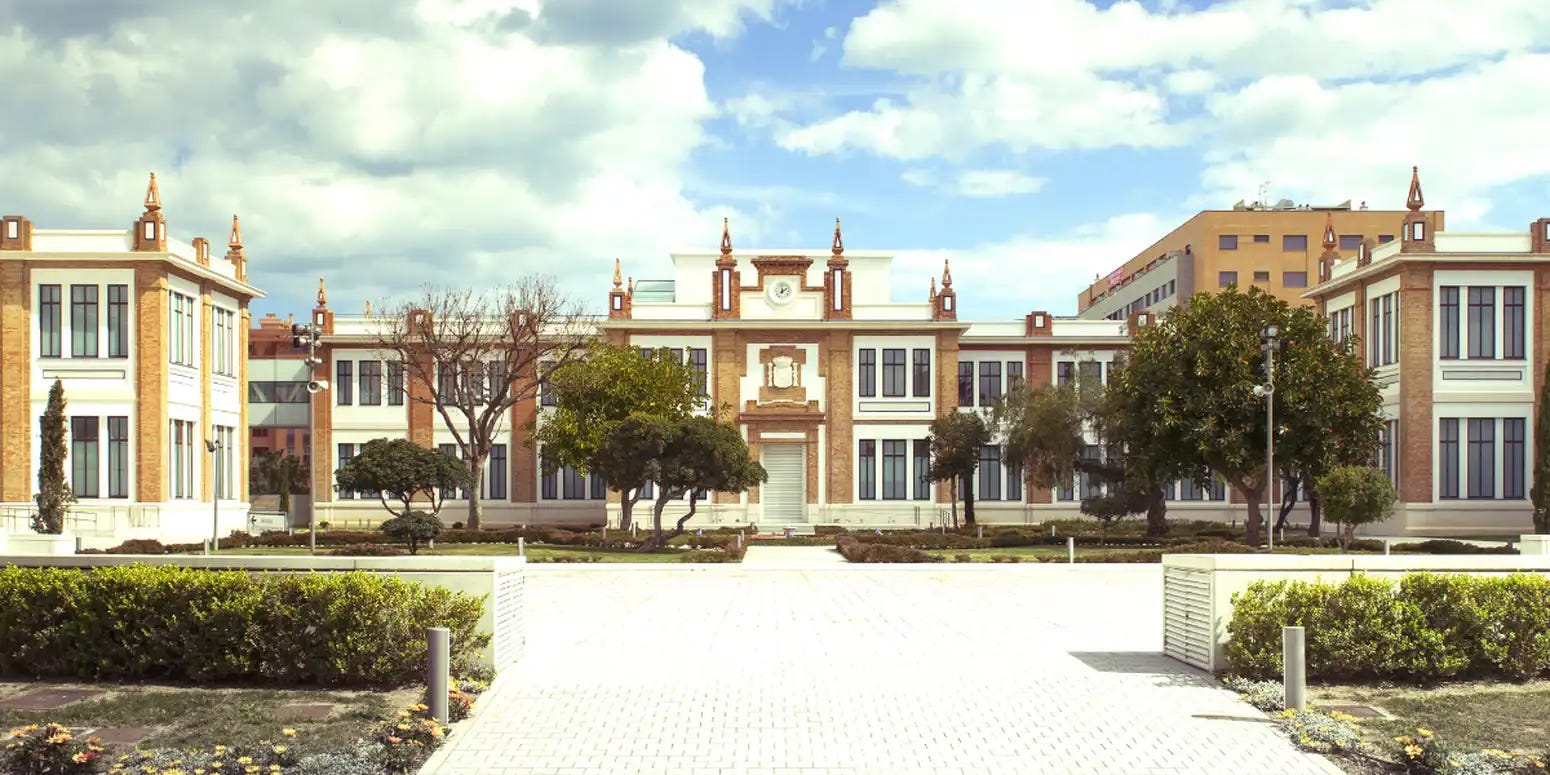
So. Never depend on Tripadvisor is my advice. There is everything to see inside this beautifully redesigned space that was formerly the Royal Tobacco Factory in the Carretera de Cádiz district. As of this moment, the following exhibitions are still up: Valery Katsuba: Romantic Realism; Anna Pávlova: A Life Without Borders; Marisa Flórez: A Time to Look; Más Allá de Su Tiempo: The Adventure of a Collector; and The Art of Painting: Confluences in the Time of the Hapsburgs. I saw all but the last.
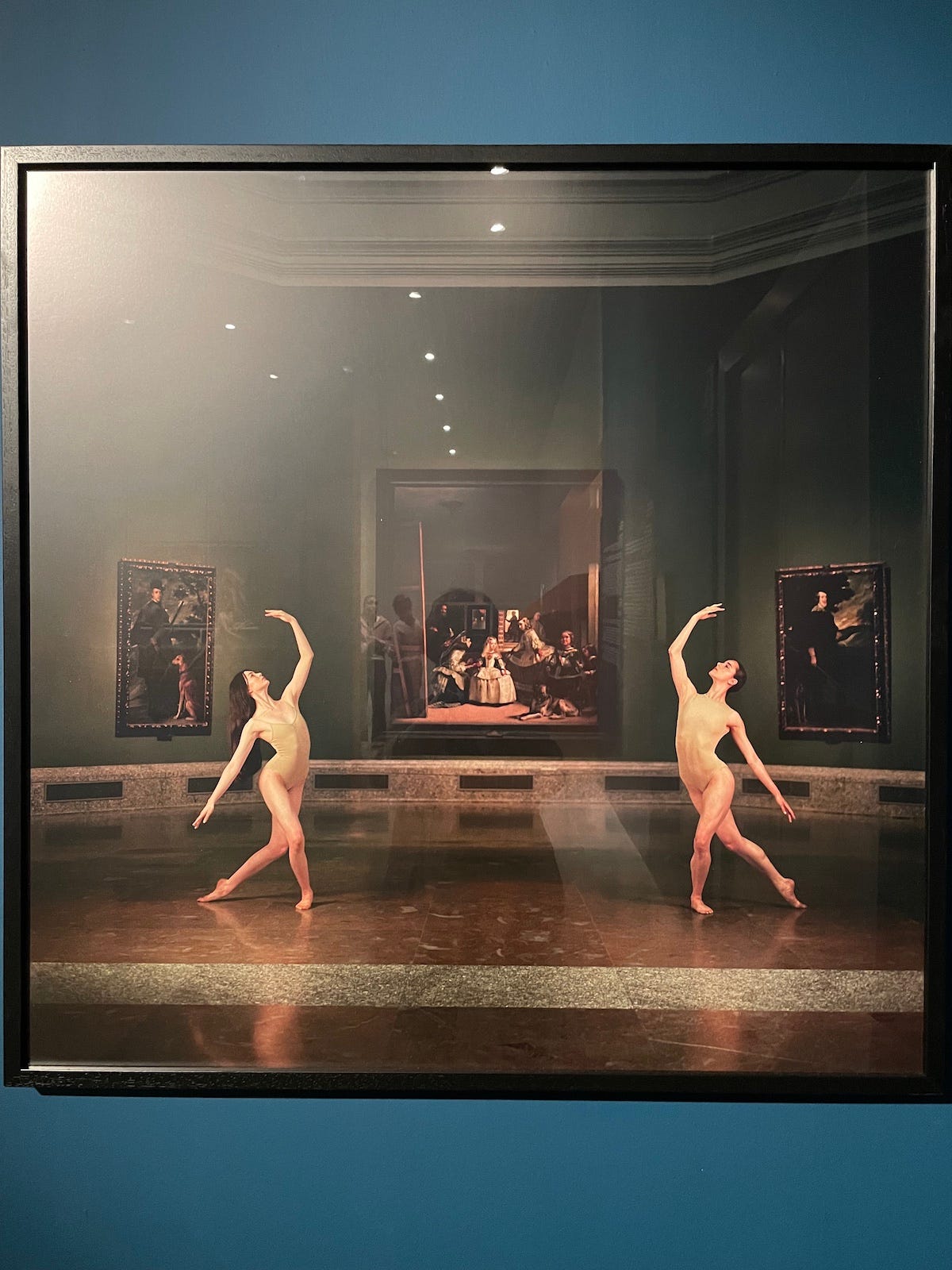
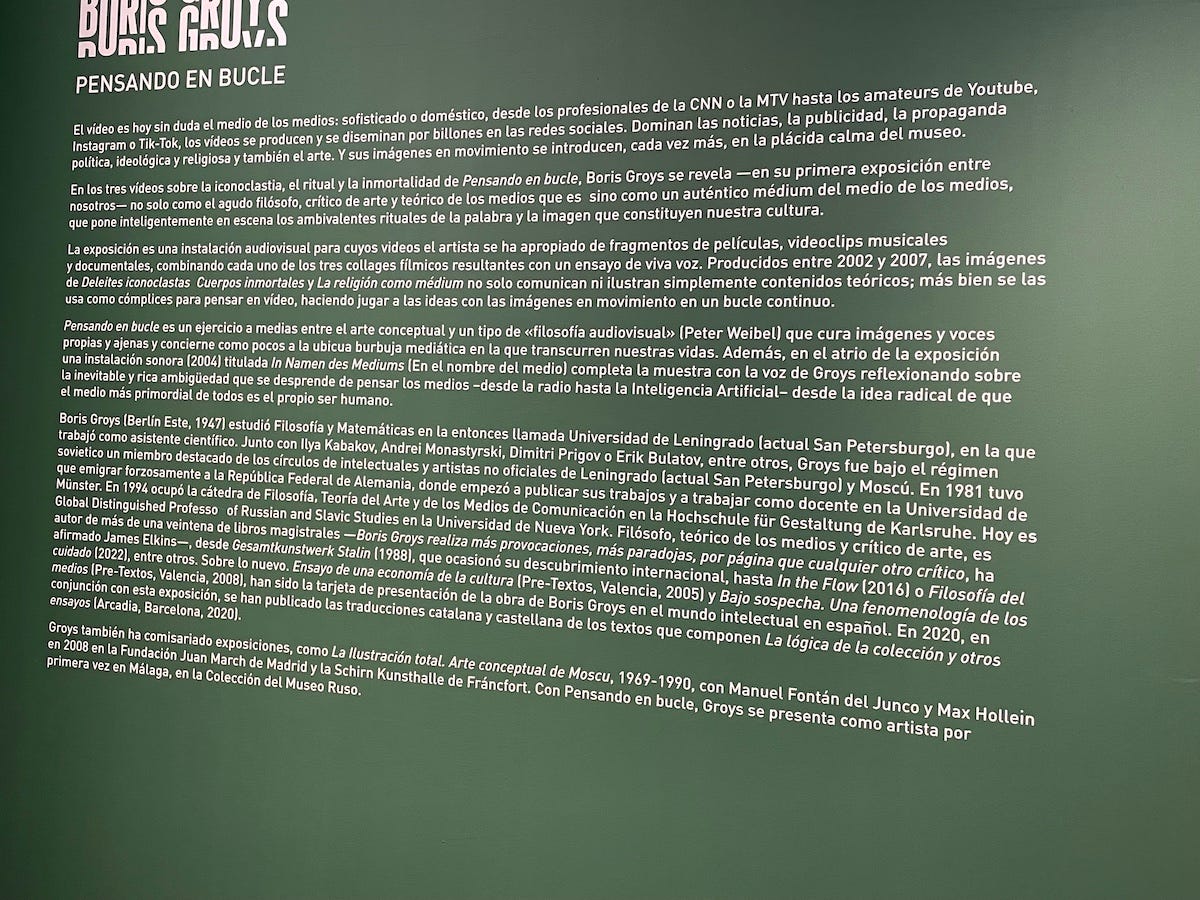
And there’s one more that I just lucked out on seeing - Boris Groys: Pensando en bucle (Thinking in Loops). This exhibition closed a day after I left for home and I’ll be working it over, tilling the soil, harvesting the fruit, for quite some time to come. It was an audiovisual exhibition of videos and texts in which Groys appropriated fragments of musical and textual video clips to make three video collages that resulted in oral essays. Sound dry? Most art theory is, BUT—the images he chose were not just illustrations, they were the message itself. He used clips as accomplices, thinking in video, narrating conceptual ideas against moving pictures in a continuous loop.
Going further, every religion, every mass movement, begins with a single flame carried by one person. This then spreads across time and cultures to infect larger and larger groups. I really would like to give you a clip, but came up blank online so words will have to do. In the first collage, a man walks back and forth in a cold windy courtyard, trying and failing to keep a votive candle lit as he carries it from one end of the space to the other. After several tries, he succeeds in keeping the flame alive and placing the candle on a ledge at one end. A second video collage shows you another man, or perhaps the same one. He’s dressed in a robe like Jesus in a painting, let’s say he is Jesus, and he walks through multitudes of adoring people who have parted like the Red Sea. He is reaching out to touch their hands in blessing. The third video is linked below, about life after life. This is how it’s always been, iconoclasm, ritual, and immortality.
What does this have to do with the individual as artist? Art fancies itself as something other, something more elevated and special than group think. Here I need to quote Groys directly.
“I would suggest that today artists need theory to explain what they are doing—not to others, but to themselves. In this respect they are not alone. Every contemporary person constantly asks these two questions: What has to be done? And even more importantly, How can I explain to myself what I am already doing? The urgency of these questions results from the collapse of tradition that we are experiencing today. Let us again take art as an example. In earlier times, to make art meant to practice—in ever-modified form—what previous generations of artists had done. In the modern period, to make art has meant to protest against what these previous generations did. But in both cases, it was more or less clear what that tradition looked like—and, accordingly, what form protest against that tradition could take. Today, we are confronted with thousands of traditions floating around the globe—and with thousands of different forms of protest against them. Thus, if somebody now wants to become an artist and to make art, it is not immediately clear to him or her what art actually is, or what the artist is supposed to do. In order to start making art, one needs a theory that explains what art is. Such a theory makes it possible for artists to universalize, to globalize their art. A recourse to theory liberates them from their cultural identities—from the danger that their art will be perceived only as a local curiosity. That is the main reason for the rise of theory in our globalized world.” (italics mine)
And does this have anything to do with phenology? How necessary is theory when it comes to planting a garden? The answer is, not at all. Hands in the soil, hearts to whatever god you believe makes things grow. Growing further with Groys, we come to understand that the individual who sees him/herself through the eyes of others, who self-creates on the internet, does so in opposition to communication with others, let alone with the life of the soil. Just as museums are repositories of dead objects disassociated from their original purpose, today’s art lives in the performance of the artist as self. Instagram, Tik-tok, YouTube and the like are the ephemeral canvases onto which they project themselves.
Now loop back to that man in the courtyard, trying to keep the flame alive.
Once more with sources:
As I said, I’m not done with this. I’m going to order a copy of In the Flow, and have discovered a pdf with some small images from the Pensando en bucle collages. It’s in English.
Facts on the Colección del Museo Ruso are culled from this website and this article in the Guardian.
Who is Boris Groys, born in Soviet Berlin in 1947? Here’s the Wiki primer:
For more on flow, I am indebted to this review by John Pistelli.
If you really want to go deep, watch Susannah Kleeman’s interview with Boris Groys.
Are you more into zombies? This is one of the video collages from Pensando en bucle, especially apt in the context of the Russian Museum’s Pávlova exhibition.
A change of pace, and a feast for the soul, Pávlova herself in an early performance.
If you did already know about Boris Groys, and have read some of his work, I’d love to hear your thoughts about it. If your garden’s ahead of ours here in the Northeast, send me some promises of hope from where you are. Or maybe you just want to react to the post with a like or a comment - that too I would love.
If you’d like to support my writing with a one-time donation, this is how you do it, and I will be most grateful!
Did you know that you can join my community in your browser or in the Substack app? Substack is ad-free, has no paywall, and you can read all my posts in one place.

I am struck with what seems so obvious but is not at all clear: the need to explain to our individual selves what is being done/tried/attempted. What practice is our effort.
I had this conversation with myself last week, only not as clearly with maybe needing a definition I can internalize.
My tomatoes poked from the soil this week. They are eight-plus weeks from living outside!